.jpeg)
05.06.2023
Cooling systems significantly impact the total operating costs of data centers. Sales Director Pavel Herout has been working with these technologies for more than two decades and is one of our key experts in this field. In today’s interview, we discussed not only his perspective on the solutions Altron currently delivers and implements, but also his professional journey to the position of Sales Director.
You have been with Altron for more than 15 years. How did your career begin, and how did you enter the data center industry?
I entered the data center field after joining Altron. Before that, I focused on cooling and HVAC systems. I worked as Head of Service for building cooling systems and larger technological units. I was also responsible for transport refrigeration — cooling and freezing units installed in vehicles. In my first position, I gained experience in HVAC systems, where I established service operations for cooling technologies for our customers. I continued leading technical teams at Altron, and my early years here were quite diverse. A key milestone was the development of our first modular data center prototype, which I was responsible for. Of course, I worked closely with other experienced team members, but I personally focused on coordination and cooling system design. We completed the prototype in record time — we received the assignment in February and presented it at a congress in May. Looking back, I see it as a major turning point in Altron’s strategic direction. Today, we are highly successful in the field of modular data centers.
You now serve as Sales Director. Could you describe your current focus?
Currently, I primarily manage key clients in the security sector, which represents a significant portion of our customer portfolio. I focus on developing long-term business relationships and overseeing projects from A to Z — from initial feasibility studies through to operational delivery.
Cooling is your specialization. What are the key cooling technologies Altron currently applies?
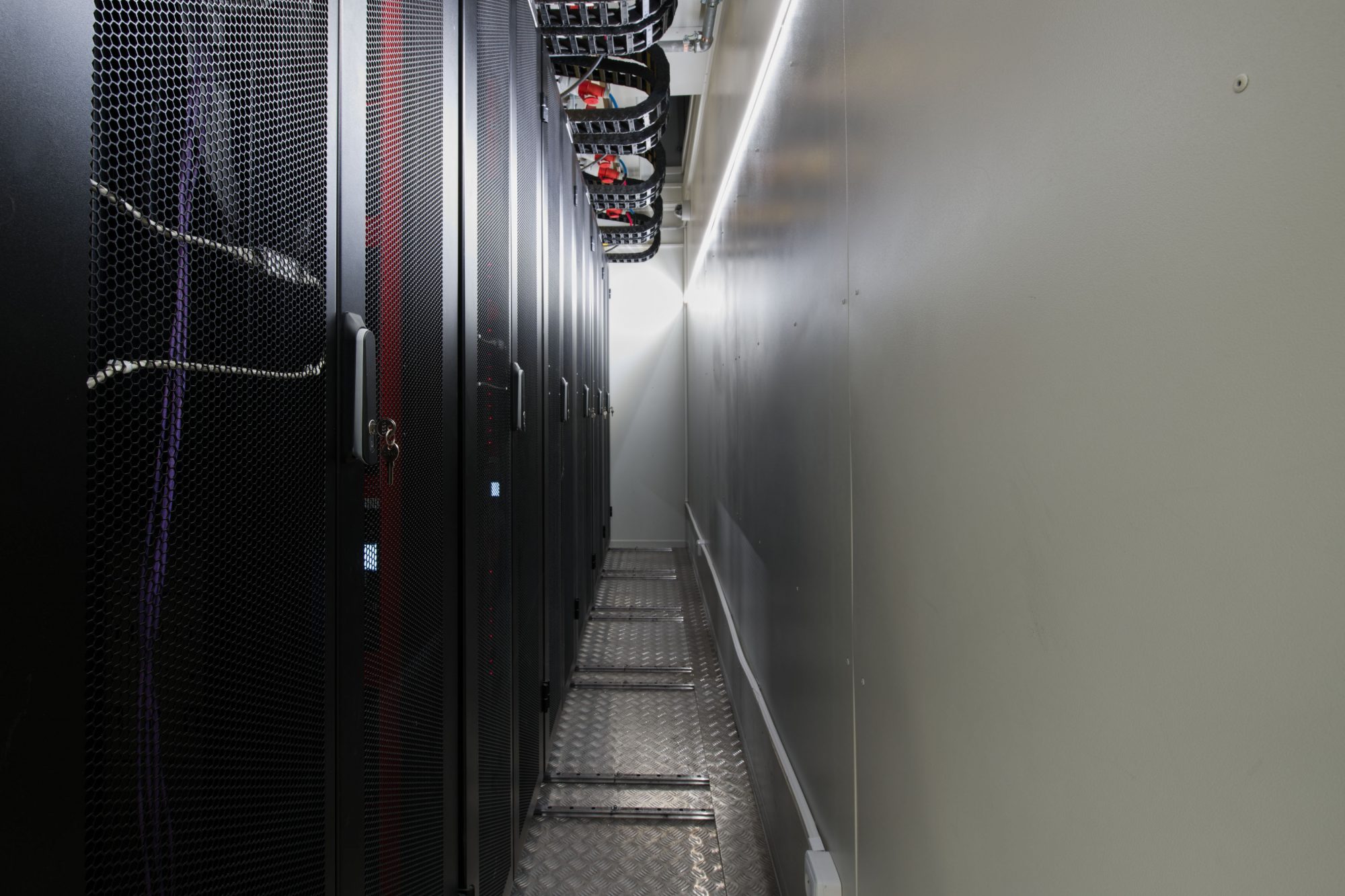
The choice always depends on the specific data center design. For example, in containerized data centers, we use HVAC units mounted on the ceiling of the container to maximize usable IT space. From a broader perspective, the global trend is toward reducing the amount of refrigerant used in cooling circuits. In practice, this means a return to water-based cooling and other natural alternatives that are more environmentally friendly. These solutions avoid refrigerants whose leakage may contribute to global warming or negatively impact the ozone layer. One such alternative is adiabatic cooling.

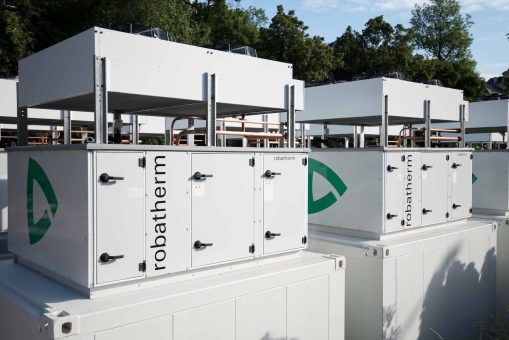
*Cooling of the Nagoya Data Center
Adiabatic cooling is used, for example, in the Nagoya data center. How revolutionary is this technology?
Adiabatic cooling is one of the key technologies used in larger projects. It is based on the distribution and evaporation of water into the air. This method can be used either for direct cooling of air supplied to the data hall or for localized cooling of outdoor technologies.
For example, Seznam.cz data centers utilize this technology. In their earlier facilities, water is used for indirect cooling—the air is cooled via recovery heat exchangers. In the newer Nagoya data center, however, the air supplied to IT equipment is cooled directly by water. Within the Czech Republic, this represents a relatively innovative approach.
Adiabatic cooling works by leveraging the physical properties of air and water. Outdoor air passes through a cooling system where it comes into direct contact with a fine water mist. As the water evaporates, it absorbs heat from the air, lowering its temperature. This enables rapid and efficient cooling during high outdoor temperatures without relying on traditional compressor-based cooling units.
In summary, adiabatic cooling offers several advantages:
Overall, adiabatic cooling represents an efficient and environmentally responsible solution for modern data centers.
Cost savings are currently a major topic. How do you approach operational efficiency in your projects?First, I would emphasize a fundamental principle: every kilowatt-hour saved in IT operations significantly reduces the energy demand of all connected technologies—especially cooling, which is typically the largest energy consumer in a data center.
If equipment that is not currently required is powered down, it no longer needs electricity. This eliminates energy losses in UPS systems, transformers, transmission infrastructure, and naturally reduces cooling demand as well.
This is the first general step toward savings.
The next step involves increasing operating temperatures in the data hall and expanding the use of free cooling. Another effective approach is recovering waste heat for secondary applications, such as water heating or other operational and production processes.
How do current environmental requirements influence the design and operation of data centers from a cooling perspective?
I will be slightly skeptical here. Current environmental requirements primarily influence data center design by increasing investment costs. Most sustainability-related measures increase capital expenditure.
In this field, environmental responsibility often comes at a higher upfront cost.
How important is regular inspection of cooling systems in reducing energy consumption? How often should maintenance be performed?
For systems operating year-round, professional maintenance is required two to four times per year. Naturally, this depends on the specific technology, IT load, and other operational factors. The more sophisticated the system, the greater the need for regular professional care.

THE Art of Engineering