


26.09.2022
Energy consumption in data centers is rising rapidly in line with the increasing demands of IT operations. At the same time, the market is undergoing a significant transformation, and businesses across all sectors are seeking ways to reduce energy-related costs.
What are the best practices for designing an energy-efficient data center? And how are current European regulations shaping this issue? We discussed the topic of data center energy efficiency with our Sales Director, Pavel Herout.
Europe is currently facing an energy crisis. Given the situation in the energy market, client requirements for more energy-efficient solutions are becoming increasingly urgent. However, the growing interest in energy-saving technologies is not merely a reaction to the current crisis — it builds on a trend that has been developing for several years.
„Reducing energy consumption is an entirely understandable requirement. Energy efficiency has been a topic in the data center industry for quite some time. Because we have been addressing this issue proactively, we are ahead of the curve and able to effectively apply the knowledge and experience we have gained over the past years,” says Pavel Herout.
It is important to recognize that while energy efficiency is improving, data volumes continue to grow rapidly. As a result, total energy consumption is still increasing. In practice, this means we are speaking more about controlled optimization rather than absolute reduction. Maximizing performance while reducing costs can be achieved through several approaches.
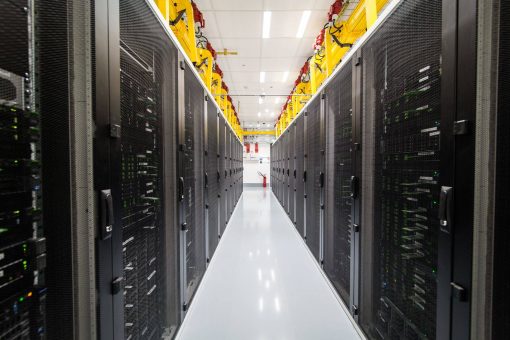
“The first and most fundamental task in data center operations is an IT audit. Eliminating outdated, inefficient, or even unused equipment is essential for reducing energy consumption. The logic is simple — what does not need to run does not need to be powered or cooled.”
A practical example of energy reduction includes the use of low-loss UPS systems, transformers, and free cooling technologies. One such implementation can be found in the Kokura data center of Seznam.cz. These energy-efficient technologies have been operating reliably for nearly ten years. More information about this project can be found in one of our previous articles.
Additional savings can be achieved by utilizing waste heat generated by electrically powered technologies. In conventional setups, this heat is simply discharged into the surrounding environment without further use. Through heat recovery systems, however, it can be repurposed — for example, to heat adjacent non-production spaces or to support nearby manufacturing processes — thus enabling more efficient use of the original electrical input.
Operational discipline during IT installation also plays a critical role. IT equipment must draw intake air exclusively from designated cold aisle distribution zones. Servers should be installed in racks in a manner that prevents air leakage or recirculation between cold intake air and hot exhaust air. Mixing intake and exhaust air significantly reduces cooling efficiency and increases overall data center power consumption.
All of the above measures represent proven methods for improving energy efficiency. However, major technology companies are experimenting with unconventional approaches.
One example is an ambitious project in China, where a large-scale data center is planned to be built underwater within the next five years, using the surrounding cold seawater for cooling. Experts, however, suggest that construction costs may significantly outweigh the potential energy savings.
“Placing data technologies underwater may make sense for smaller systems. For example, Microsoft successfully conducted such an experiment two years ago. A container-sized data center was submerged for two years, and the results were highly promising. The challenge arises when maintenance or servicing is required — despite the fact that failure rates tend to decrease underwater.”
For now, this concept is not commercially viable for large-scale operations. However, the reliability data obtained from such experiments may prove valuable for improving traditional land-based data centers.
Within the data center energy ecosystem, cooling represents the second largest energy demand after IT itself. The waste heat generated by servers must be efficiently removed to prevent damage.
To reduce operational costs, modern cooling units with optimized performance parameters are increasingly deployed.
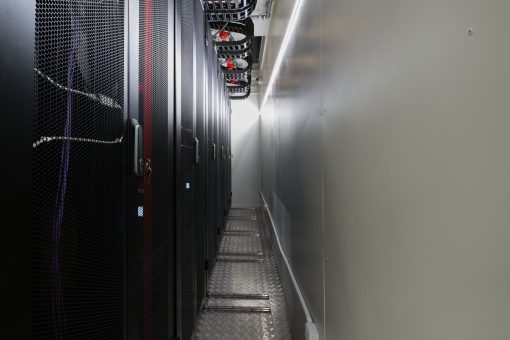
“A good example is the compact air-handling unit used in our mobile Edge DC data center. For most of the year, it operates without compressors. As a result, it can reduce cooling-related energy consumption by more than 40% for over six months annually. From a long-term perspective, this represents substantial cost savings.”
Mobile data center solutions are popular among many institutions due to their efficient operating costs, long service life, and modular design, which enables rapid deployment.
Across all sectors, there is growing pressure to reduce carbon footprints. The European Union has set an ambitious target for data centers and telecommunications to achieve carbon neutrality by 2030.
“Achieving this goal will require the majority of energy to be sourced from renewable resources, along with maximum heat recovery for secondary use. For everyone in the industry, this will represent a genuine challenge.””
Whether this target is fully achievable remains to be seen. What is certain, however, is that the ICT sector will undergo significant ecological transformation in the coming years through the adoption of sustainable and energy-efficient technologies.

THE Art of Engineering


